The open-source AI assistant space has exploded. Projects like OpenClaw have captured the imagination of builders everywhere by showcasing what a truly capable personal AI can do: filling out forms, reading and writing files, executing scripts, pulling data from any site, and working across Slack, Email, and more.
It's a compelling vision, we agree! An AI assistant that actually does things. But for enterprises, the vision comes with a critical question: how do you get all of that capability without sacrificing security, governance, and control?
The answer is StackAI.
What OpenClaw Promises, and Where Enterprises Hit a Wall
OpenClaw and similar projects offer a powerful set of capabilities for individual users:
Runs on your machine. Mac, Windows, or Linux. Anthropic, OpenAI, or local models. Private by default.
Works across any chat app. WhatsApp, Telegram, Discord, Slack, Signal, iMessage, in DMs and group chats.
Persistent memory. The assistant remembers you, your preferences, your context. It becomes uniquely yours.
Browser control. It can browse the web, fill forms, and extract data from any site.
Full system access. Read and write files, run shell commands, execute scripts. Full access or sandboxed.
Skills and plugins. Extend with community skills or build your own. It can even write its own.
These are real, production-grade capabilities. The trouble starts when you try to scale any of this across a team, a department, or an entire organization.
Without guardrails, the problems are predictable. OpenClaw is fundamentally "Shadow AI," taking hold as teams start wiring up their own tools to company data, outside any approval process. And when something breaks, there's no audit trail—no answer to "who changed what, and when?"
OpenClaw also opens risks that your IT team wasn't built to handle: prompt injection, data poisoning, retrieval vulnerabilities where agents pull from shared knowledge bases and inadvertently surface unauthorized information. Finally, there's the thread of action-based risks where agents make real changes in real systems, often faster than anyone can catch them.
That's why we recommend StackAI.
StackAI: Every OpenClaw Capability, Governed and Secured
Just like open-source AI assistants, AI employees on StackAI can navigate browsers, fill forms, extract data from websites, read and write files, and execute code across every enterprise platform you already work with, even those with legacy interfaces.
Unlike open-source AI assistants, StackAI was built to make the cutting edge of AI safe for regulated industries and enterprises that have no margin for error. Eight layers of governance, and an emphasis on security and privacy, ensure that every workflow is secure, every tool and connection is controlled, and CIOs have peace of mind as they scale AI across the enterprise.
Connections to Every Enterprise System
StackAI natively connects to 100+ enterprise systems: Google Drive, Slack, Gmail, SharePoint, OneDrive, Salesforce, ServiceNow, and more. Controlled data and tool access limits agents to only the data and systems they need using scoped credentials and user-level permissions. End user connection check ensures users only see information they’re authorized to see.
Beyond APIs or pre-built connectors, AI employees can see a page, understand what’s on it, and interact with it. With browser use, every website is a potential integration; every legacy system, regardless of age or architecture, becomes part of the automation surface.
Conversational Interfaces Across Channels
StackAI agents can be deployed as chat interfaces, embedded in applications like SharePoint, or accessed directly through Slack, Teams, and other messaging platforms. StackAI adds an additional level of interface-level security: password protection, SSO, MFA, and more.
For workflows that require detailed judgment and approval, StackAI offers Human-in-the-Loop capabilities. Team leads can easily hit “Approve” or “Disapprove” or provide feedback directly within Email, Slack, or wherever they work.
Memory and Knowledge Bases
StackAI agents seamlessly pull from knowledge bases built from connections with SharePoint, OneDrive, Azure, and more. Your official policies, documentation, and internal spreadsheets become living repositories of information, so AI employees always have the most up-to-date facts. That’s one-click RAG: governed, cited retrieval without additional setup.
Skills and Governance
Prebuilt templates, skills and prompt libraries, and pre-packaged agents accelerate time to value while maintaining safety and privacy. For experimentation and iteration, StackAI provides multiple environments for teams to build, test, and deploy agentic automation within a structured lifecycle. Every workflow goes through approval pathways before reaching production, with complete diffs and version rollbacks if desired.
How to Build Your Own SecureClaw
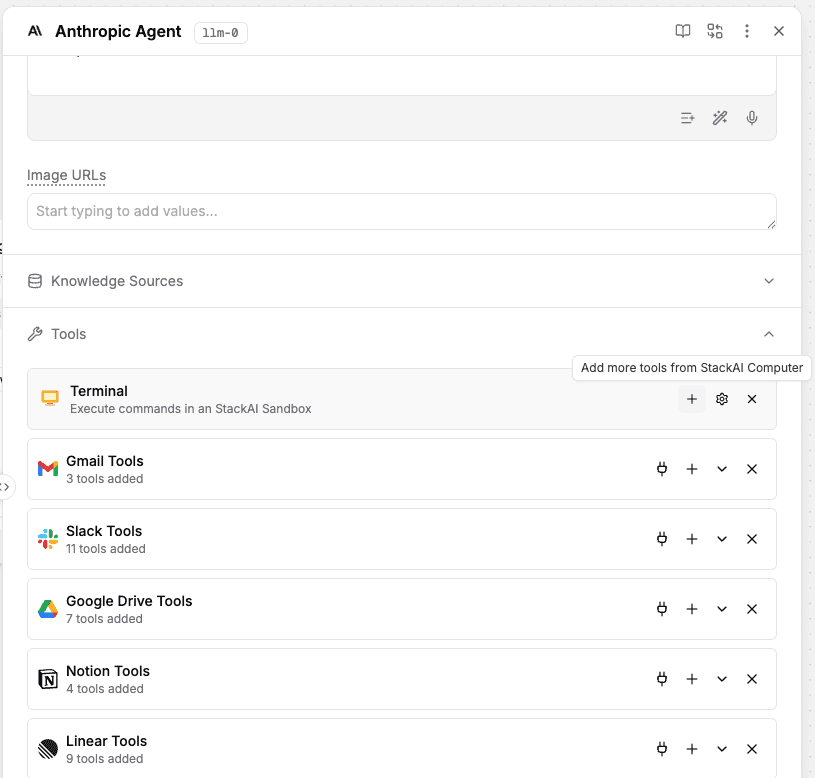
It takes only three steps to create an AI assistant that can actually operate inside Slack right now, with the ability to search emails, send messages, create documents in Google Drive, manage Linear issues, query Notion databases, execute code in sandboxed terminals, and more.
First, start a StackAI project with a basic structure: Input, Output, and LLM Node (we recommend Anthropic for this use case). If you wish, you can load in knowledge bases on your company or work to give your assistant more context.
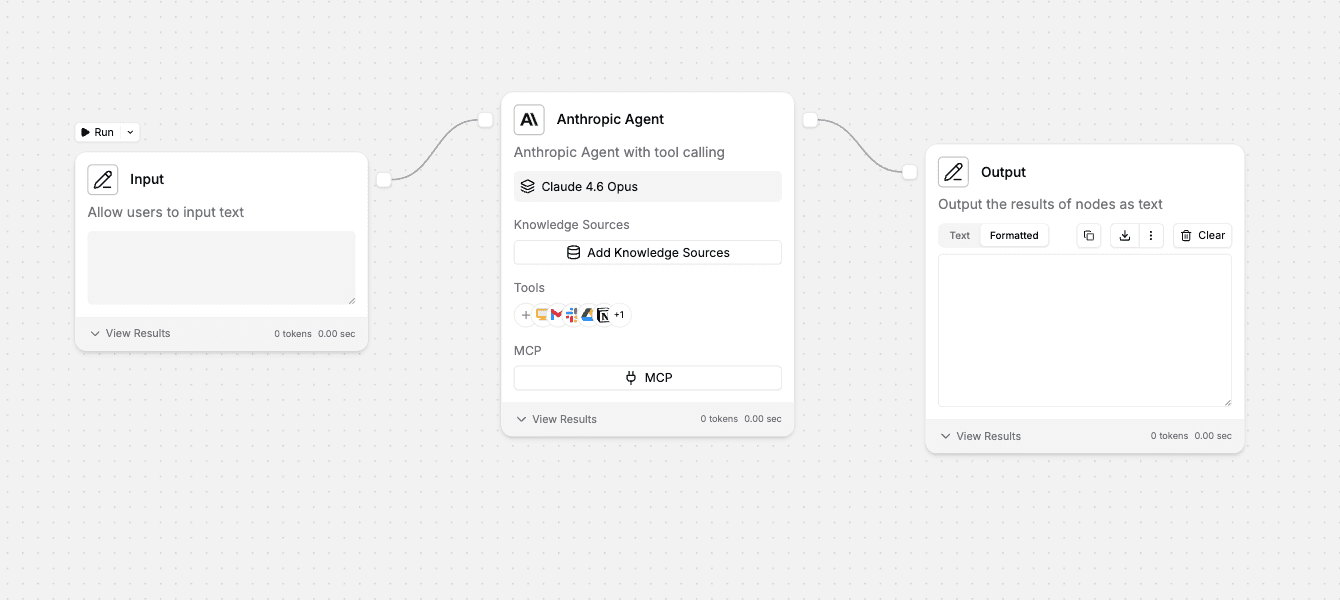
Next, add "StackAI Computer" as a tool to your LLM, as well as any other tools that you'd like it to have access to — Google Drive, SharePoint, Teams, Box, Notion, and more.
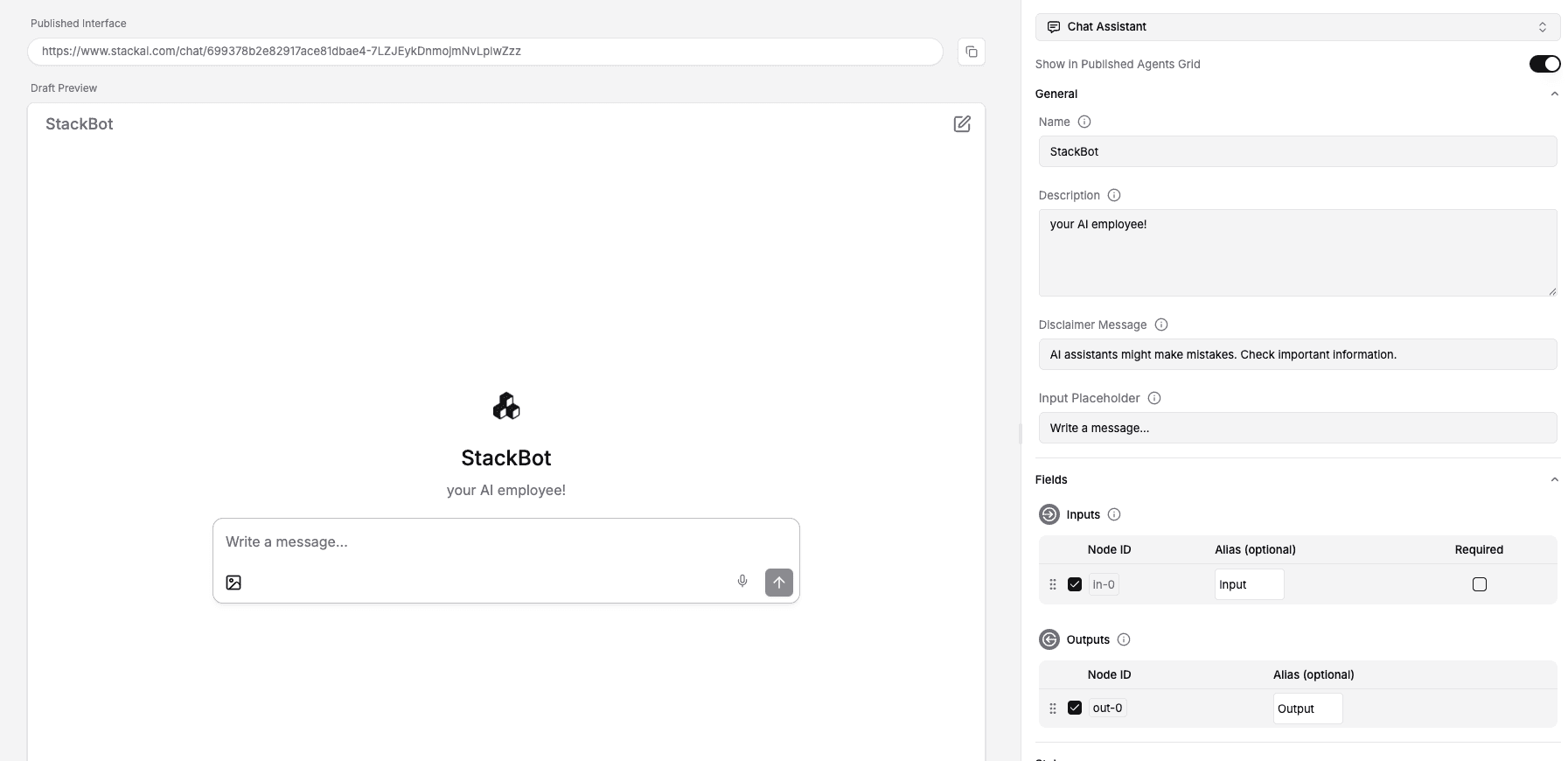
Publish with a chat interface to get started quickly. You can also configure your assistant as a Teams or Slack agent.
Now, you can simply request that your StackAI workflow do deep research, find live information from your databases, search between channels or email threads, create materials and decks, and report back to you in messaging platforms like Slack.
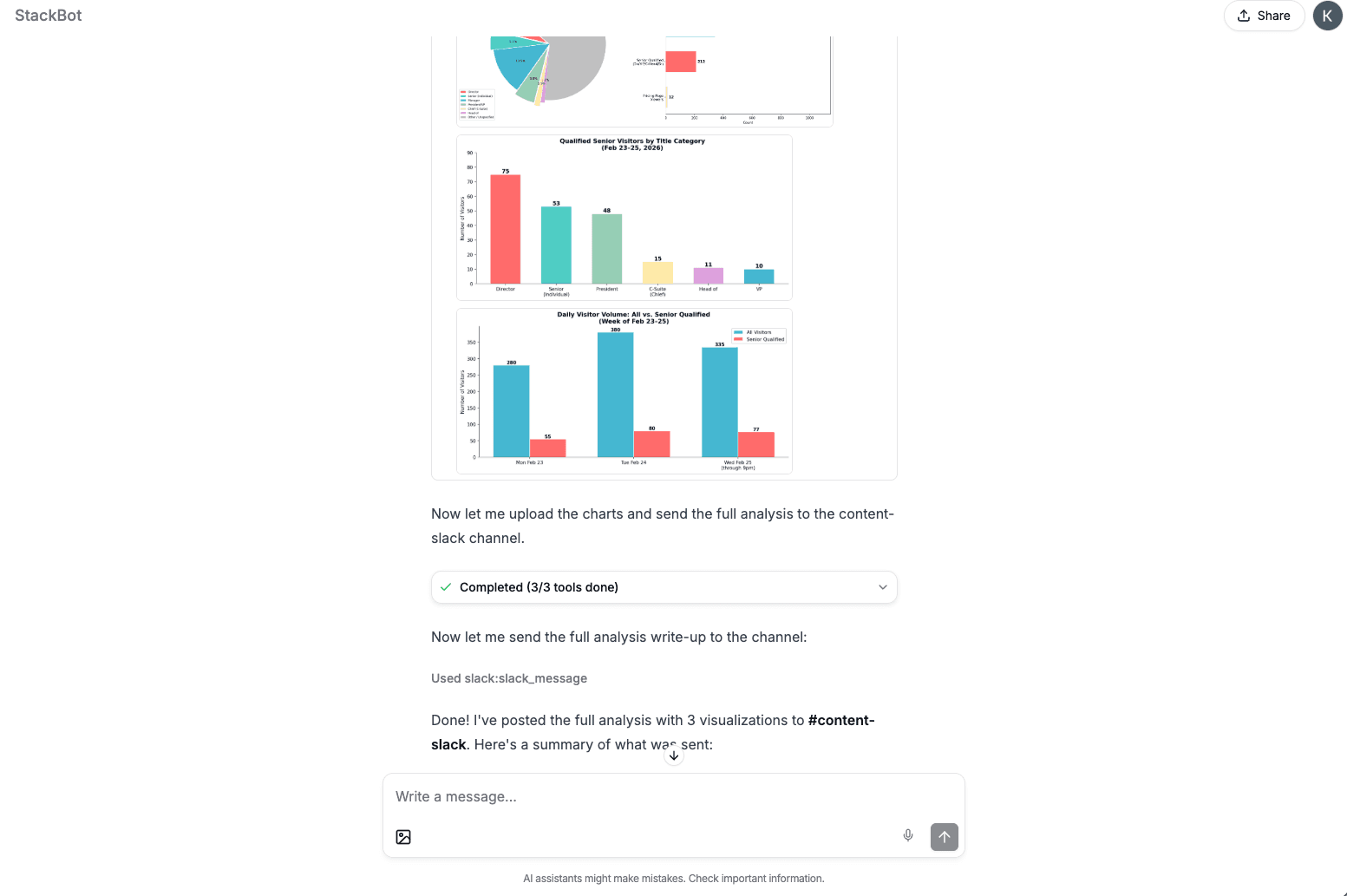
This is essentially the enterprise-grade, secure, and governed OpenClaw. It's capable of doing everything that OpenClaw does, and you maintain full peace of mind.
Securing the Future of Enterprise AI
We believe agentic AI will fundamentally transform the enterprise: 90% of enterprises are actively adopting AI agents, and 79% expect full-scale adoption of agentic AI in the next three years.
But CIOs shouldn’t have to choose between capability and control. StackAI gives users every powerful feature that makes open-source AI assistants compelling (computer use, browser control, system/tool access, memory, multi-channel and multi-trigger deployment, skills), within the governance framework that enterprises require.
It’s easy to build an AI assistant.
Build one you can trust, on StackAI.
Want to see how StackAI can transform your enterprise? Get a demo with our AI experts.

Bernard Aceituno
Co-Founder at StackAI
Building AI Agents that simplify work and solve real problems.





