As enterprise AI adoption accelerates, decision-makers face a critical fork in the road. On one side are AI governance and orchestration platforms that act as secure gateways between employees and large language models. On the other side are AI automation platforms that go beyond chat, connecting models directly to enterprise systems to execute complex, multi-step workflows.
Airia and StackAI sit on opposite sides of that divide. Understanding what each platform actually does—and, more importantly, what it doesn't do—can save your organization months of misaligned investment.
Quick TL;DR: StackAI vs Airia
Dimension | Airia | StackAI |
|---|---|---|
Primary role | AI gateway / governance layer | End-to-end AI automation engine |
ROI type | Soft dollars (avoided risk) | Hard dollars (labor savings, throughput) |
Workflow depth | Routes prompts, logs output | Ingests, reasons, approves, writes back |
Where it stops | The chat window | Your systems of record |
RAG / Knowledge Bases | Limited | Native, one-click, auto-syncing |
Integration depth | Broad MCP catalog | 100+ deep enterprise connectors (SAP, Oracle, Workday, etc.) |
On-premise / air-gapped | Not publicly documented | Yes, fully supported |
Implementation support | Account management, self-serve | Forward-deployed engineers, co-building, quarterly reviews |
Interfaces | Slack, Teams, SharePoint, Chatbots, Webook | Slack, Teams, Chatbots, Triggers, Batch, Form |
Pricing | Public tiers from $0–$250/mo + enterprise | Custom enterprise pricing |
What Is Airia?
Airia is an AI governance, security, and orchestration layer for simple tasks and workflows. Its primary value proposition is top-down risk control: it sits between your employees and the various AI models or agents they want to use, functioning as a secure "tollbooth" for chatbot-related needs.
Core Capabilities
Model routing: Routes employee prompts to the right underlying model (OpenAI, Anthropic, open-source, etc.) and logs the output.
Shadow AI governance: Monitors and controls which AI tools employees access, preventing unsanctioned usage.
PII masking & compliance: Scans prompts in real time to ensure sensitive data doesn't leak to third-party models.
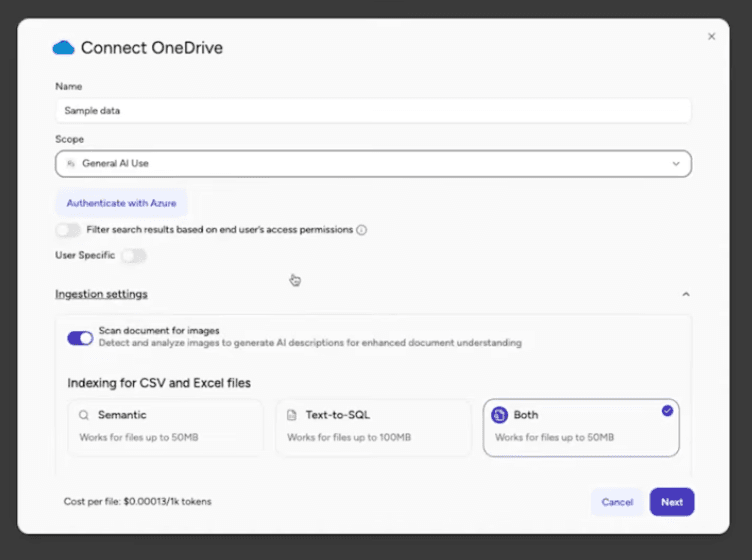
Token spend visibility: Gives finance and IT dashboards into API consumption across departments, as token cost is recorded for everything, including uploading individual files (pictured below)
Who It's For
Airia is a strong fit for organizations whose immediate priority is controlling how employees interact with external chat-based AI, for simple and straightforward tasks. If you want an employee to safely ask a model to write an email or summarize a document, Airia provides the guardrails to make that happen compliantly.
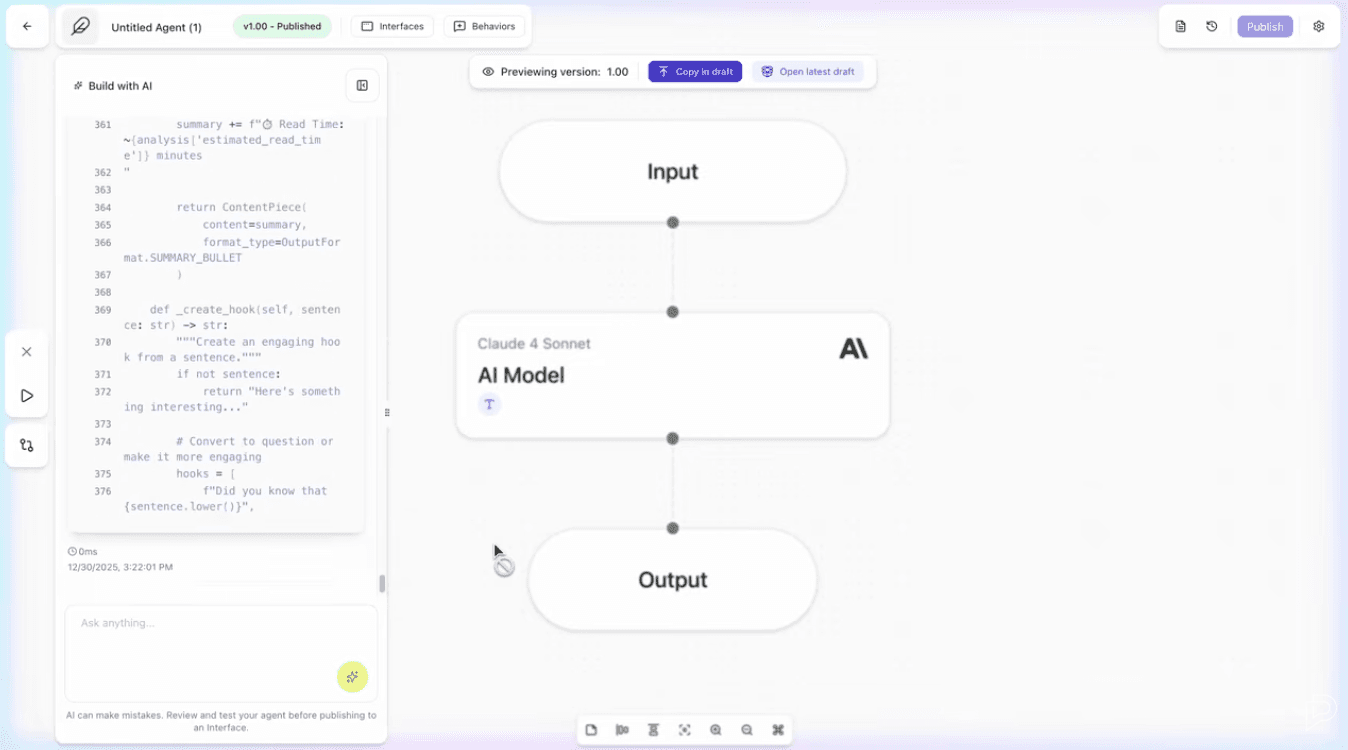
Airia is best for simple use cases, like the "Content Repurposing Chatbot" shown below. Even this example still involves technical prompting and code for a rather simple task.
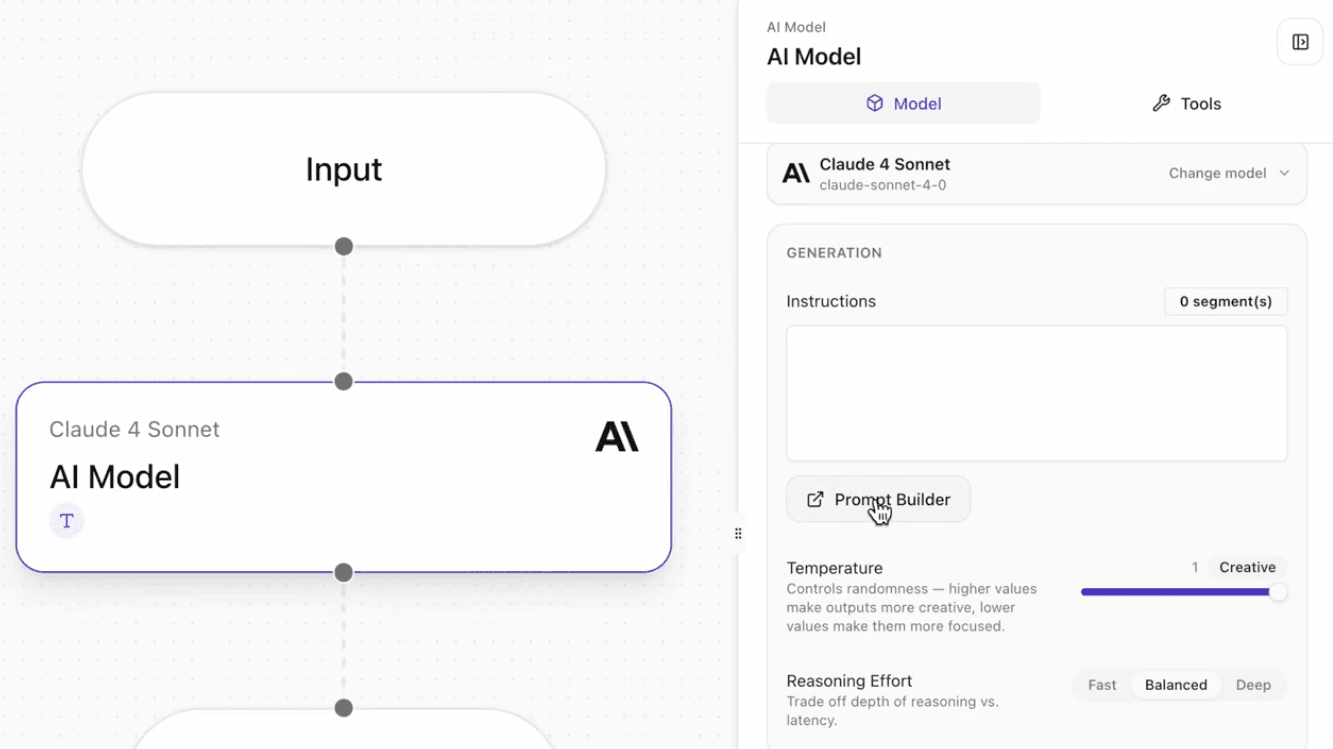
Within the LLM node, there are some limited customization options, including options to prompt and make the temperature up or down.
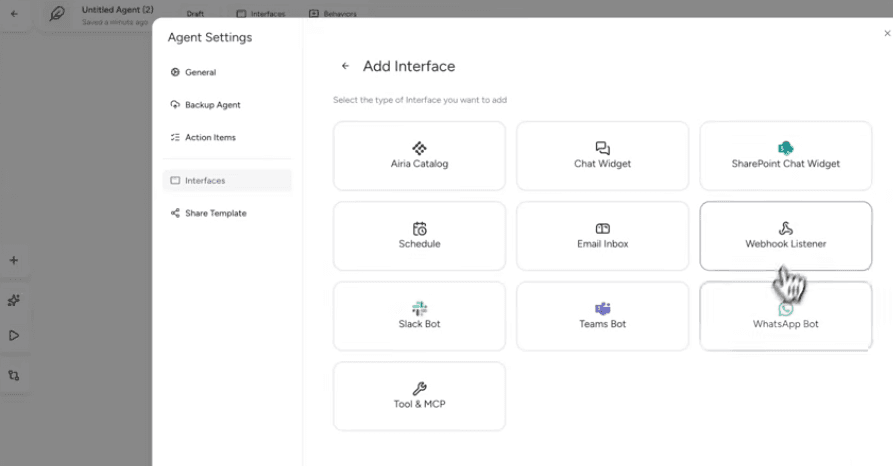
The options to deploy agents are limited to chatbots, though some can run on triggers and you can add some descriptions to a published agent to help users find them within an organization.
While there is an option to add a knowledge base, our reviewers did not see any use cases with multiple LLMs added to tackle different parts of a complex, real-world use cases. Airia seems best at creating custom chatbots with various prompts for one-off or niche use cases that are only parts of a whole enterprise workflow, such as this "NDA Generator" pictured below. We also note that these are tasks that enterprise ChatGPT, Claude, or Copilot could also do in a rather safe manner.
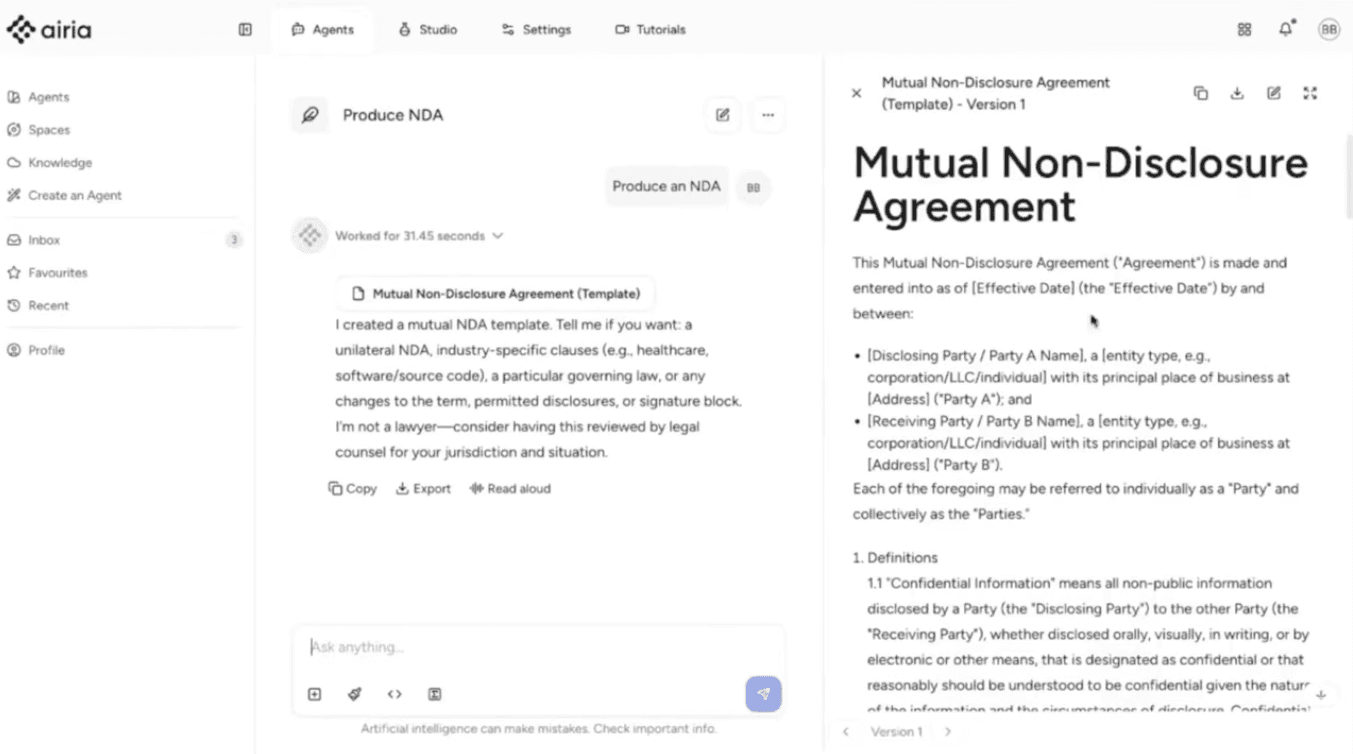
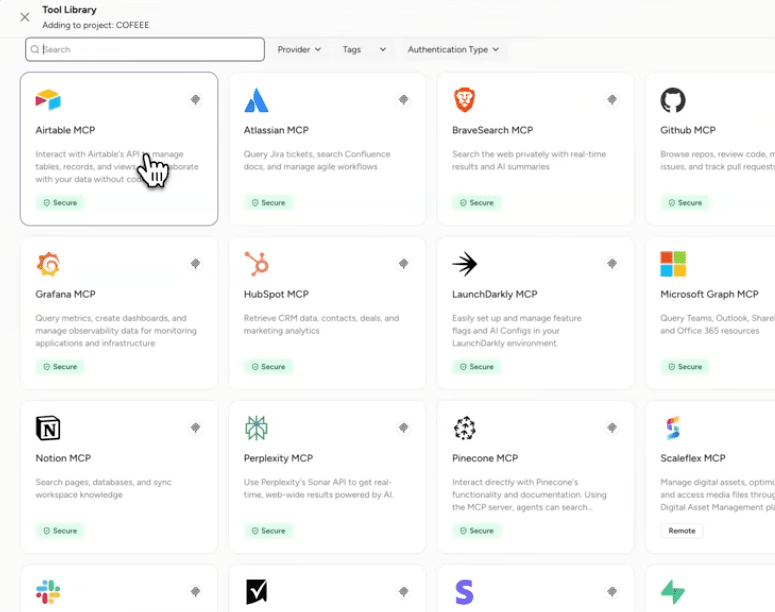
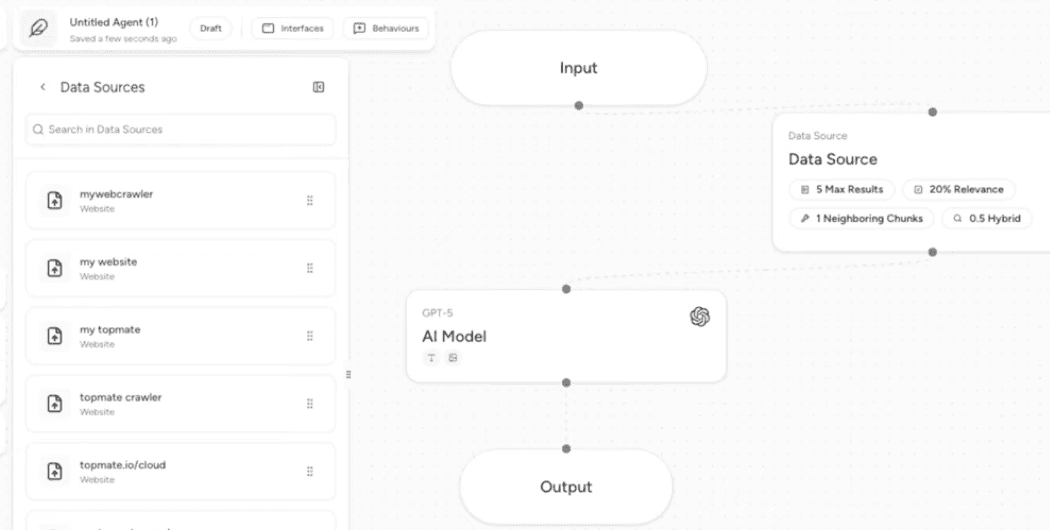
While it does offer connections to enterprise tools and databases, most data sources in use seem to be publicly-available websites (see image below), and MCP seems to be the only route for tool-calling within LLMs.
What Is StackAI?
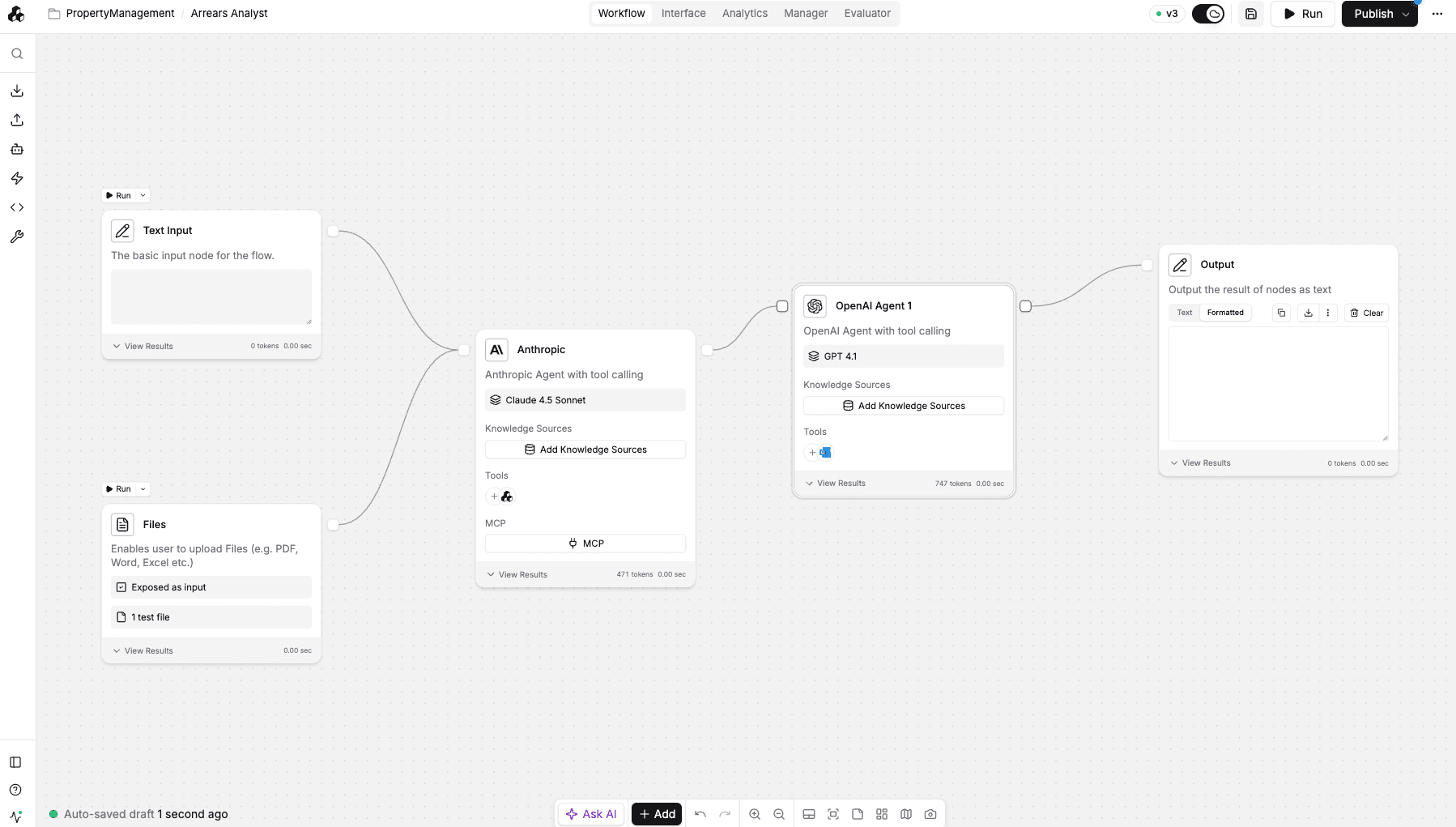
StackAI is a comprehensive, end-to-end AI automation engine. Rather than wrapping security around third-party chat agents, StackAI is designed for teams that need to securely build and execute multi-step workflows—natively connecting enterprise data directly into an action layer.
Core Capabilities
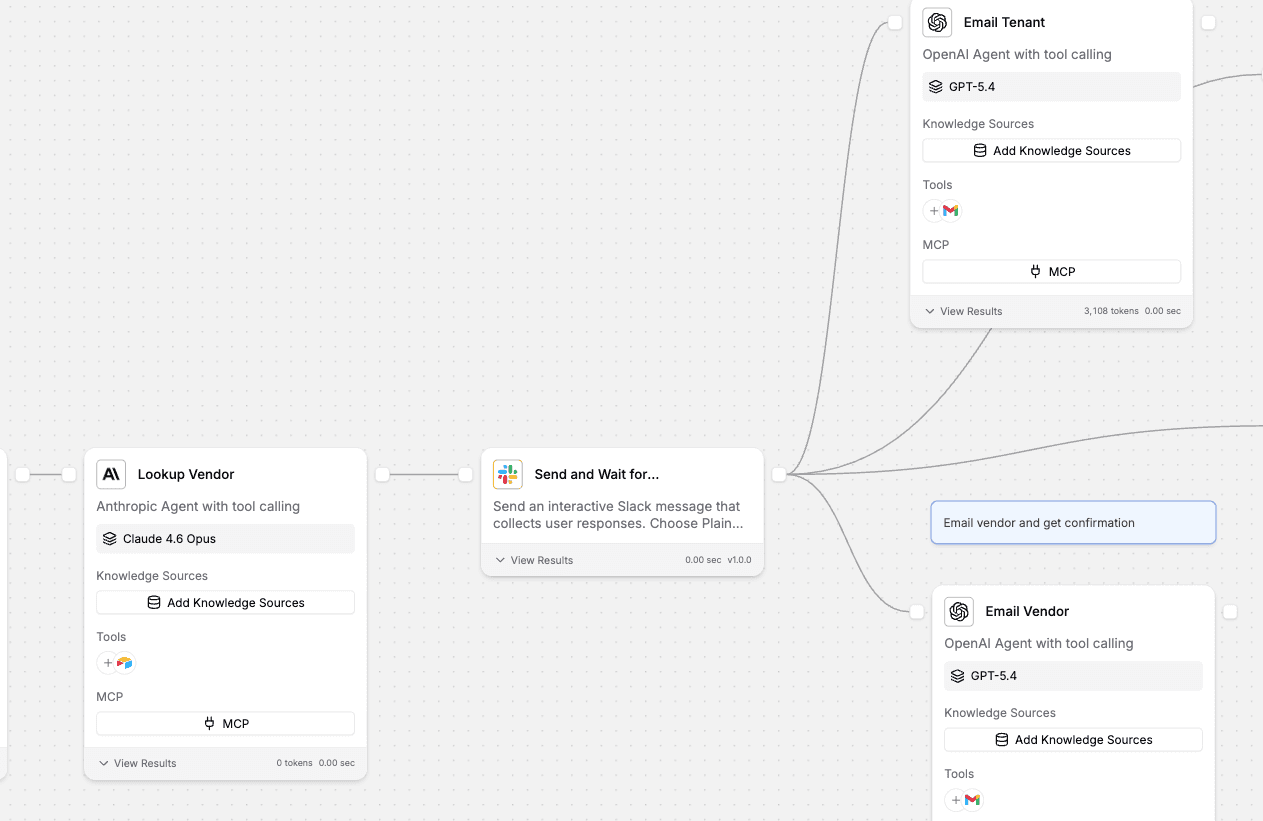
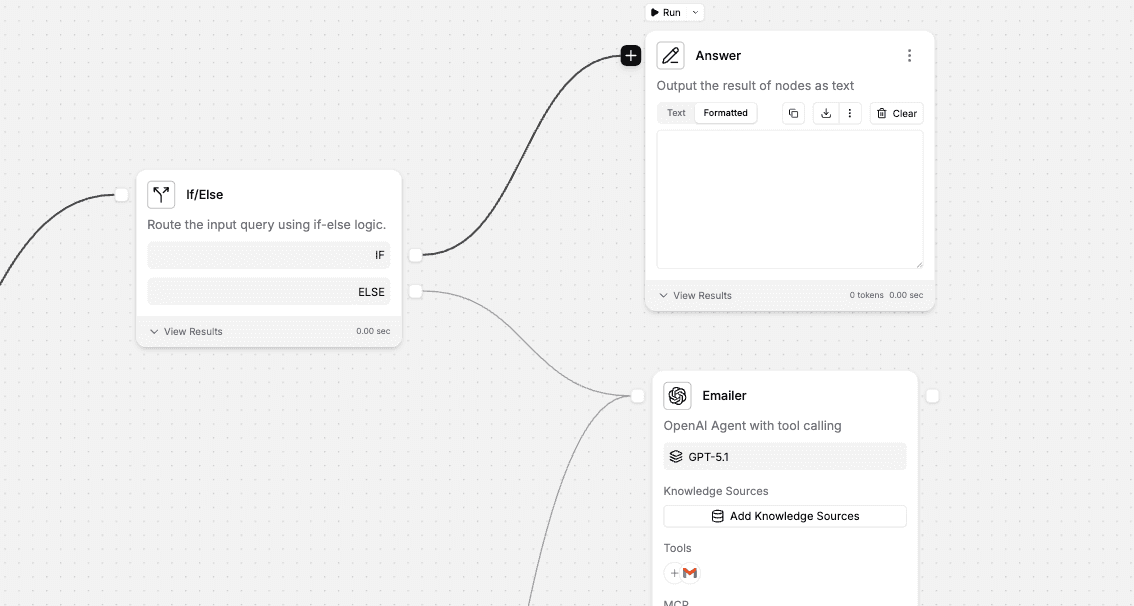
Visual workflow builder: A no-code/low-code canvas where teams design multi-step AI pipelines—from data ingestion to decision logic to system write-backs.
Native RAG (Retrieval-Augmented Generation): Built-in document indexing and retrieval so agents answer questions grounded in your proprietary data.
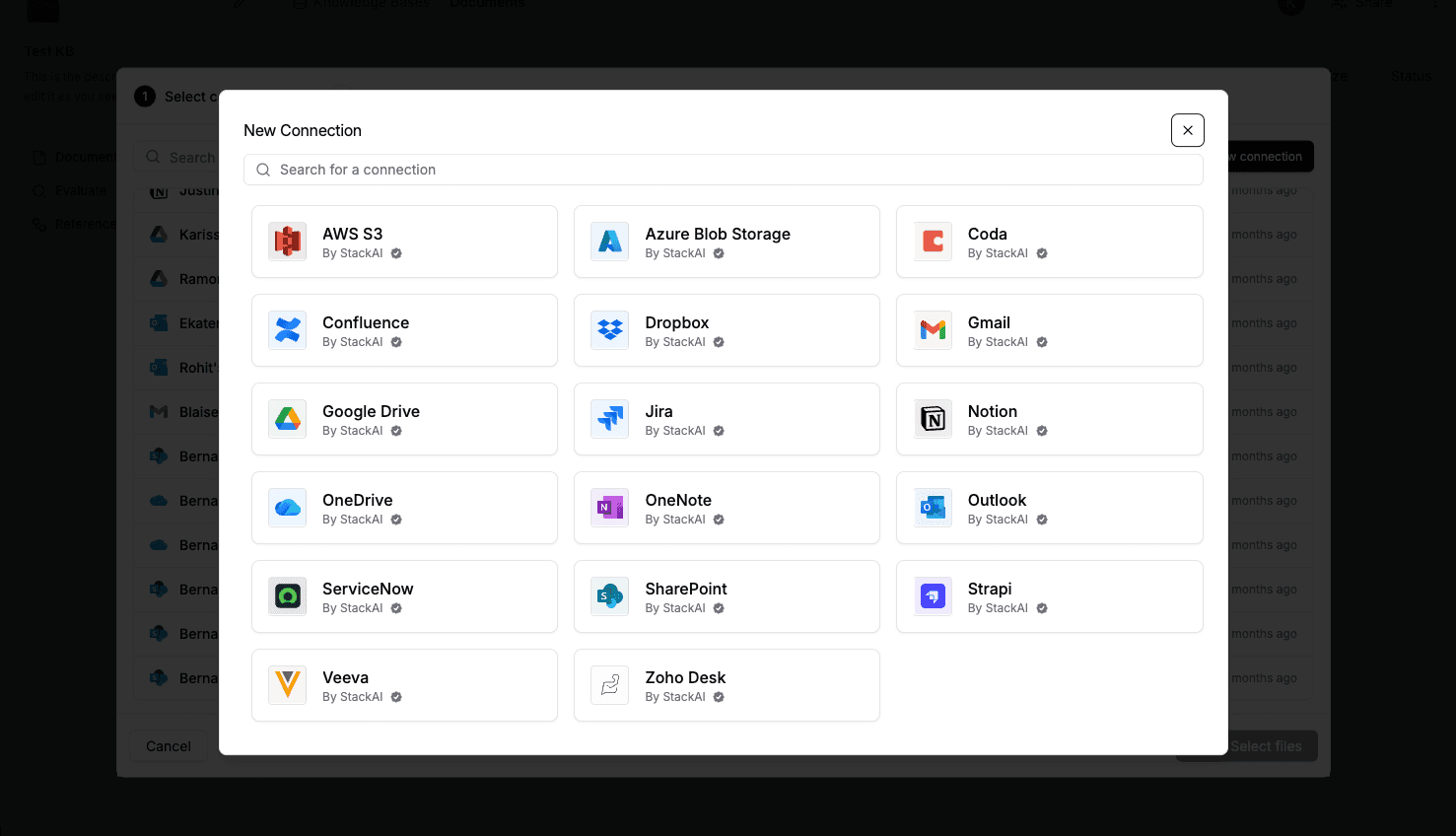
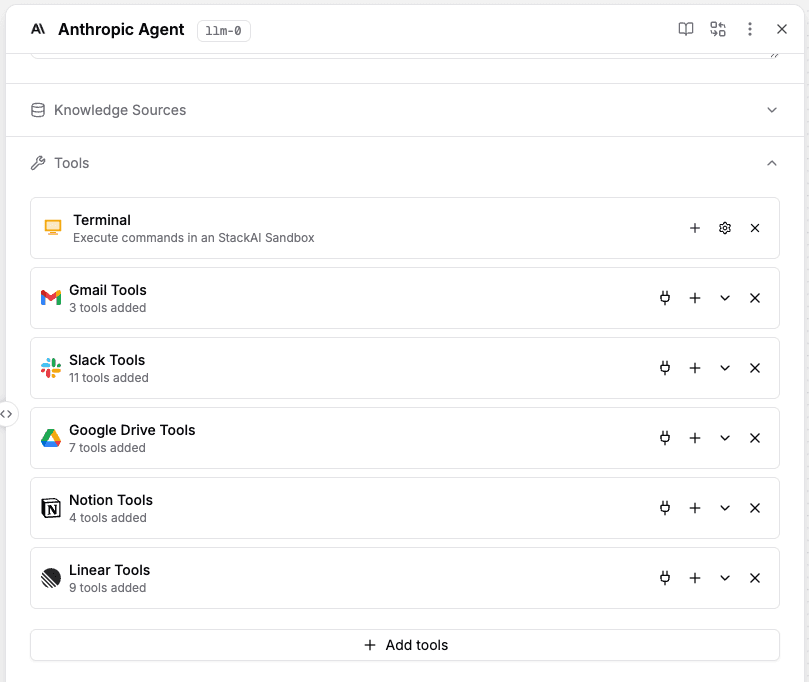
Out-of-the-box connectors: Pre-built integrations with CRMs, ERPs, ITSM tools, SharePoint, Google Drive, Slack, email, databases, and more.
Human-in-the-loop checkpoints: Approval gates that let a human review and confirm before the workflow takes an irreversible action.
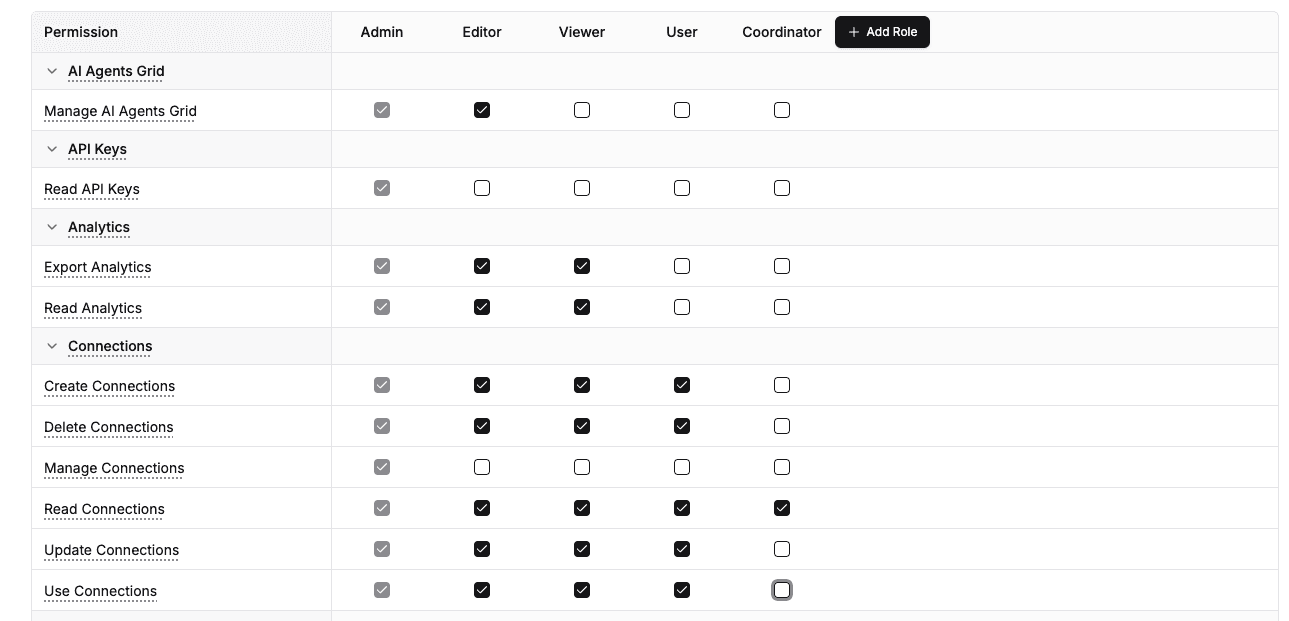
Built-in enterprise security: Granular role-based access control (RBAC), PII masking, SOC 2 compliance, and audit logging—all native to the workflow builder, not bolted on after the fact.
Deterministic + probabilistic orchestration: Bridges the creativity of LLMs with the reliability of rule-based automation (API calls, conditional branching and advanced logic, write-backs, etc.).
Who It's For
StackAI is built for operations, IT, legal, finance, and revenue teams that need AI to do work—not just talk about work. Think: extracting liability clauses from commercial contracts, auto-triaging IT tickets, generating compliance reports, or reconciling invoices across systems.
The Core Difference: Secure Chatting vs. Automated Processes
The simplest way to frame the Airia vs. StackAI comparison:
Airia | StackAI | |
|---|---|---|
Primary role | AI gateway / governance layer | AI automation engine |
What it controls | Employee access to external models | End-to-end workflows across enterprise systems |
Where it stops | The chat window | Your systems of record (CRM, ERP, ITSM, databases) |
Security model | External wrapper around third-party agents | Security built into the workflow builder itself |
Airia secures the conversation. StackAI automates the outcome. This is the distinction that matters most, and it's worth making concrete.
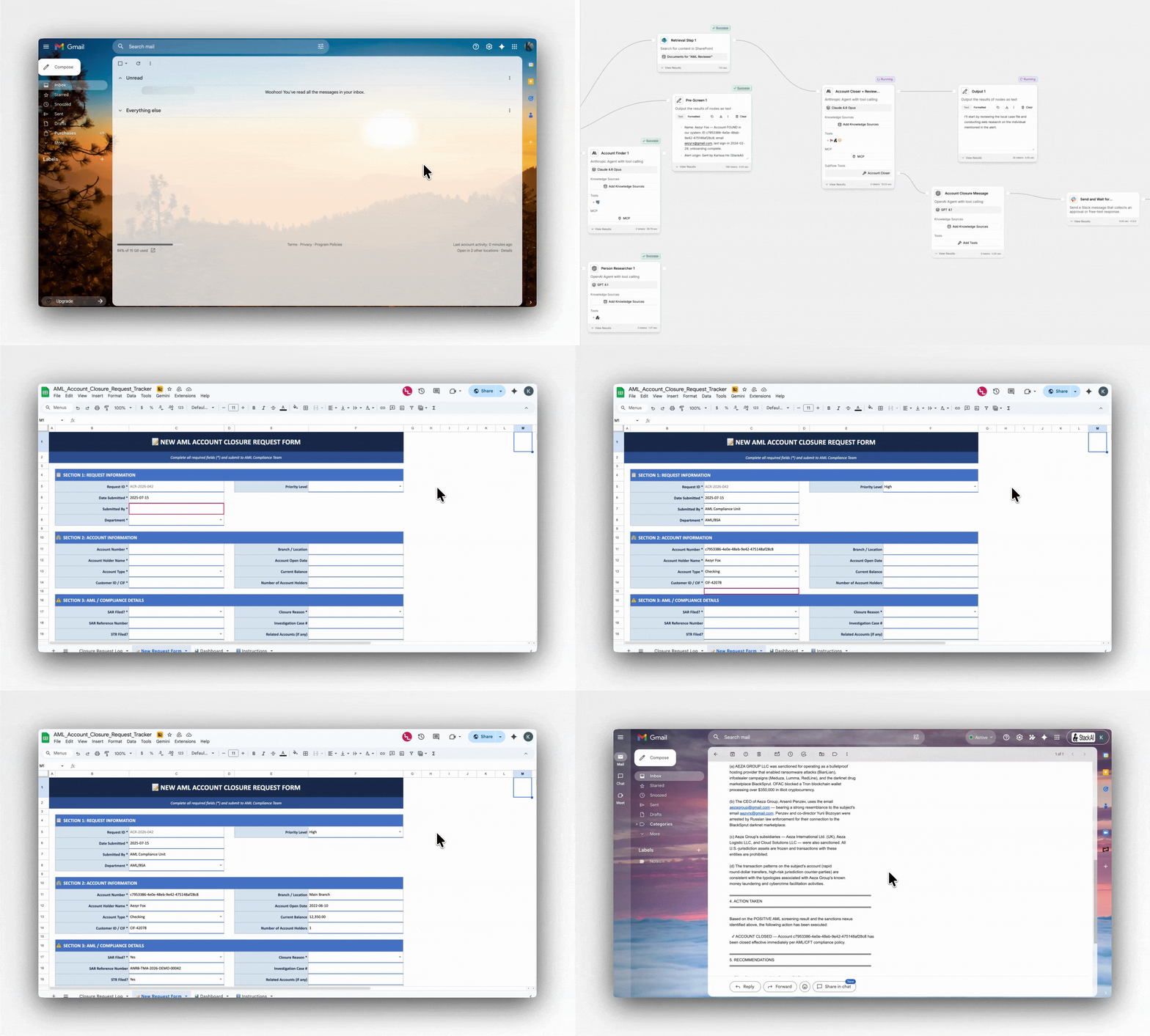
Consider a financial institution managing anti-money laundering (AML) compliance. Traditionally, this process requires analysts to manually pull transaction records from multiple systems, cross-reference them against watchlists and regulatory guidelines, assess risk across dozens of data points, draft a suspicious activity report, route it for compliance review, and log the outcome. It's time-intensive, error-prone, and difficult to scale during high-volume periods.
With StackAI, that entire workflow becomes an automated pipeline. The agent pulls transaction data directly from source systems, retrieves the relevant regulatory guidelines from a connected knowledge base, applies reasoning across all inputs, flags anomalies, generates a structured SAR draft, routes it to a compliance officer for human-in-the-loop review, and logs the completed action with a full audit trail, all within a single workflow.
This is what "end-to-end automation" actually means. Not a chatbot that gives an analyst a head start on their work. An agent that completes the work, with a human in the loop only where judgment is genuinely required.
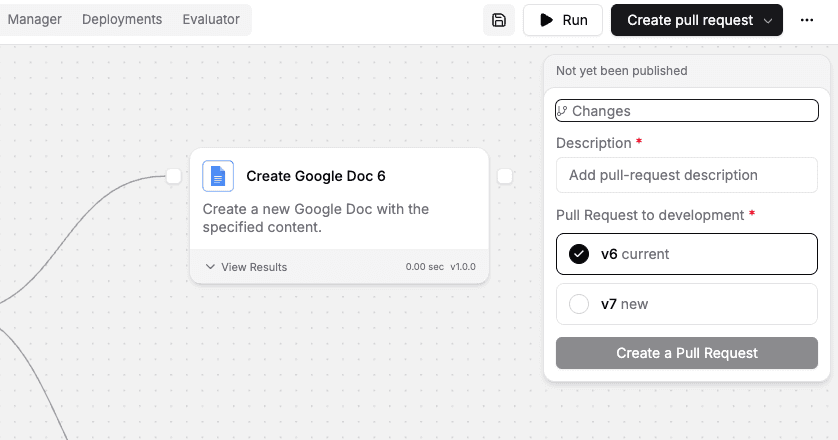
StackAI also goes a step further by governing how agents are built, tested, and promoted to production through its Agentic Development Life Cycle (ADLC). The framework applies software engineering discipline to AI: every workspace includes three fully isolated environments (development, staging, and production), every save automatically creates a versioned snapshot with a full audit trail, and organizations can require pull-request approval before any change reaches live systems. This eliminates the "cowboy coding" problem that causes enterprise AI deployments to quietly drift out of compliance. Airia has no equivalent framework for governing the development process itself. For regulated industries where auditability of how an agent was built is as important as auditability of what it does, this is a significant gap. Finally, StackAI's on-premise and air-gapped deployment options mean that the platform can be trusted by CIOs in the most regulated industries.
Airia's ROI Story (Risk Avoidance)
Airia's value proposition centers on avoided cost—compliance fines you didn't incur, data breaches you prevented, shadow-AI sprawl you contained. These are real benefits, but they are inherently soft dollars: difficult to quantify on a P&L and hard to sustain as a budget line item when boards are demanding measurable returns from AI investments.
StackAI's ROI Story (Operational Leverage)
StackAI delivers hard-dollar ROI: time-to-triage reduction, labor cost savings, and increased task throughput. When a workflow that previously required a human to manually pull a contract from SharePoint, read it, cross-reference a playbook, and draft a ticket now runs autonomously in minutes, the savings are concrete and auditable.
End-to-End Automation vs. Disconnected Steps
Here's the hidden cost of a governance-only approach: it still requires you to bolt on separate automation tools to handle the results of the AI.
Consider a practical scenario:
An employee asks a question through an Airia-secured chat agent.
The agent recommends an action—update the CRM, create a support ticket, send an invoice.
A human must still manually perform that action. The governance layer monitored the conversation, but it didn't execute anything.
With StackAI, that entire chain (from data retrieval to AI reasoning to system write-back) is a single, auditable workflow. No copy-paste. No swivel-chair integration. No dropped handoffs.
If you want an employee to safely ask a chatbot to write an email, Airia is a good fit. But if you want an AI agent to automatically pull a commercial contract from SharePoint, extract the liability clauses, cross-reference them against your playbook, and draft an approval ticket in ServiceNow, it simply won't be possible for the chatbot, no matter how secure it is. StackAI gives you the enterprise security controls Airia offers, but applies them to workflows that actually drive measurable ROI.
When to Choose Airia
Airia deserves serious consideration if:
Your primary pain point today is shadow AI—employees using unsanctioned tools with no visibility.
You need a model-routing layer to standardize which LLMs departments can access.
Your workflows are already automated elsewhere, and you only need a governance overlay for the AI chat layer.
Compliance and PII leakage prevention in employee-to-model interactions is your top board-level concern.
When to Choose StackAI
StackAI is the stronger choice if:
You need AI to execute work, not just answer questions, from contract analysis, document processing, and IT triage, to financial reconciliation.
You want a single platform that handles data ingestion, AI reasoning, human approvals, and system write-backs without stitching together point solutions.
Hard-dollar ROI (labor savings, throughput gains, cycle-time reduction) is what your CFO is measuring.
Security and governance must be built into the workflow, not wrapped around an external tool.
You want to go from a fragmented pilot to a production-grade, multi-modal AI agent in days.
Can You Use Both?
In theory, yes. Airia could govern employee-facing chat interactions while StackAI powers the back-office automation workflows. But in practice, most enterprises find that StackAI's built-in security controls (RBAC, PII masking, SOC 2, audit logging) already cover the governance requirements Airia addresses, while also delivering the execution layer Airia lacks.
The question isn't "governance or automation." It's whether you want to pay for governance alone or get governance and automation in one platform.
The Bottom Line
Airia's move to secure viral AI agents is smart governance. But in an enterprise environment where AI pilots are being scrutinized for actual economic return, the conversation must shift.
IT and Operations leaders need to ask: Is our priority to give employees a secure playground for generic chat assistants, or is it to automate the specialized, deterministic workflows that drive our business forward?
If you need a security wrapper to monitor how your teams use third-party agents, Airia is a top-tier choice. But if you need an operational asset that deeply integrates with your enterprise data and executes specialized work to produce quantifiable, hard-dollar ROI, StackAI is the execution layer you need.
Want to see how StackAI can transform your enterprise? Get a demo with our AI experts.

Rohit Sangal
Solutions Engineer at StackAI